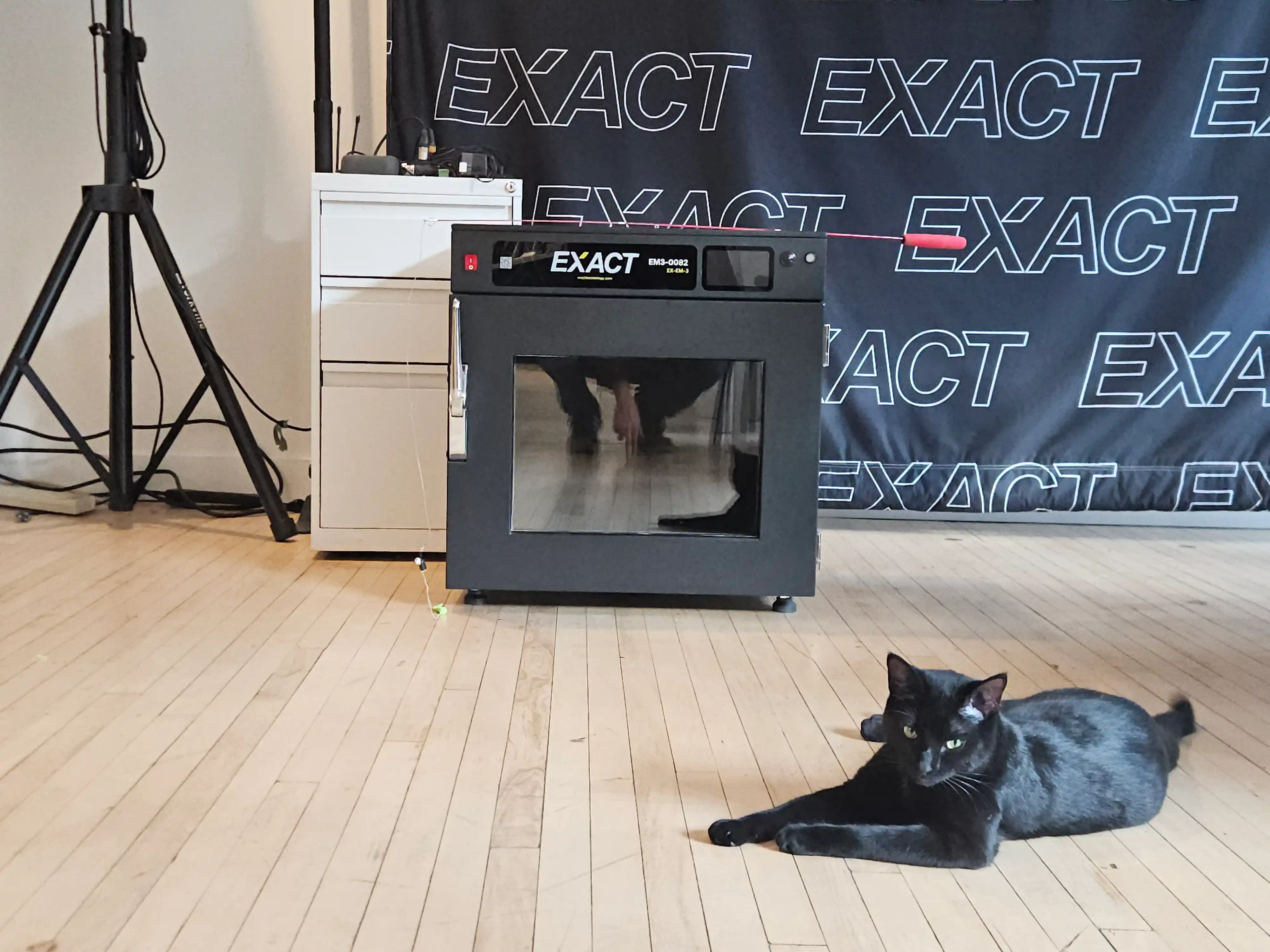
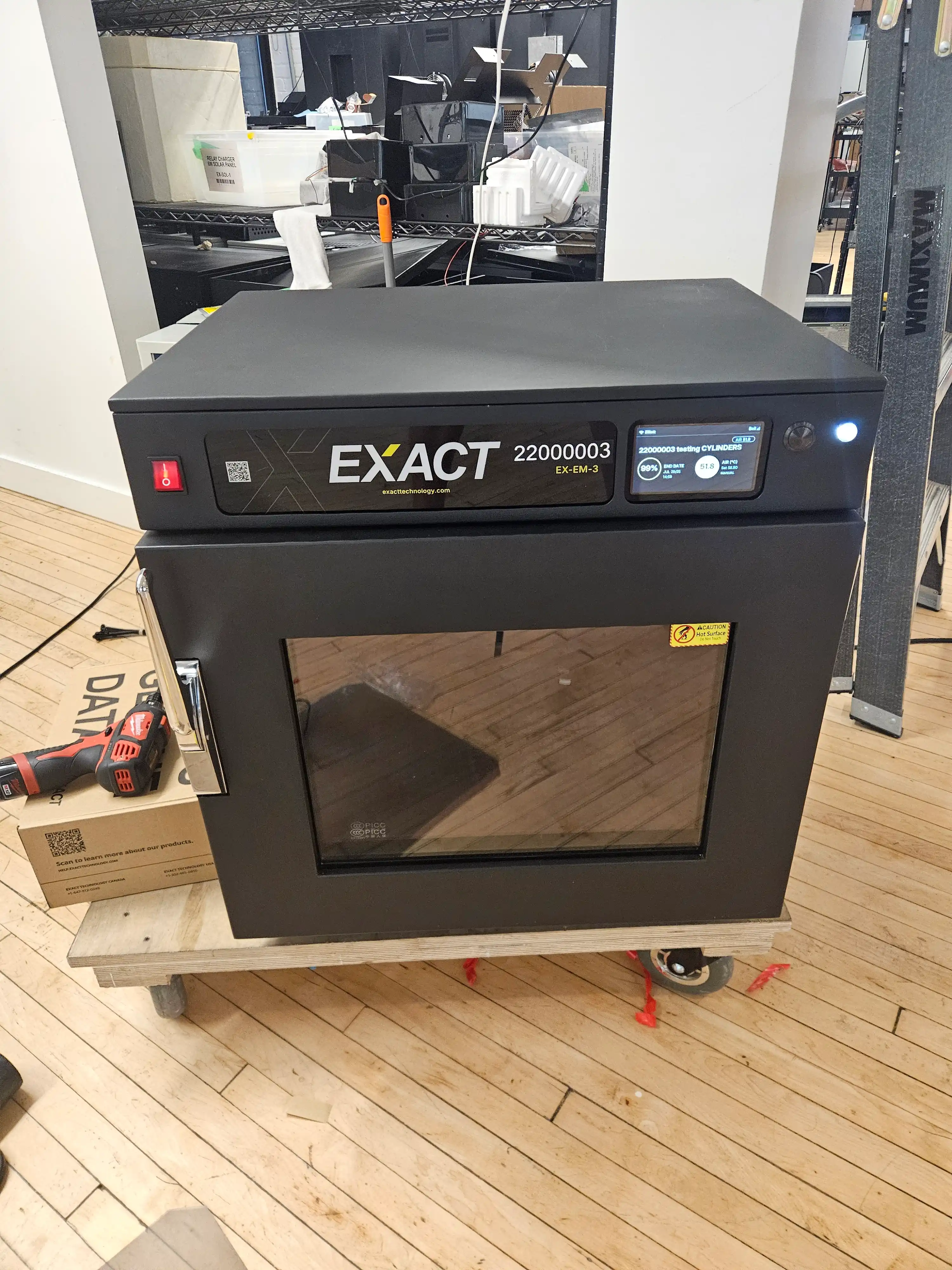
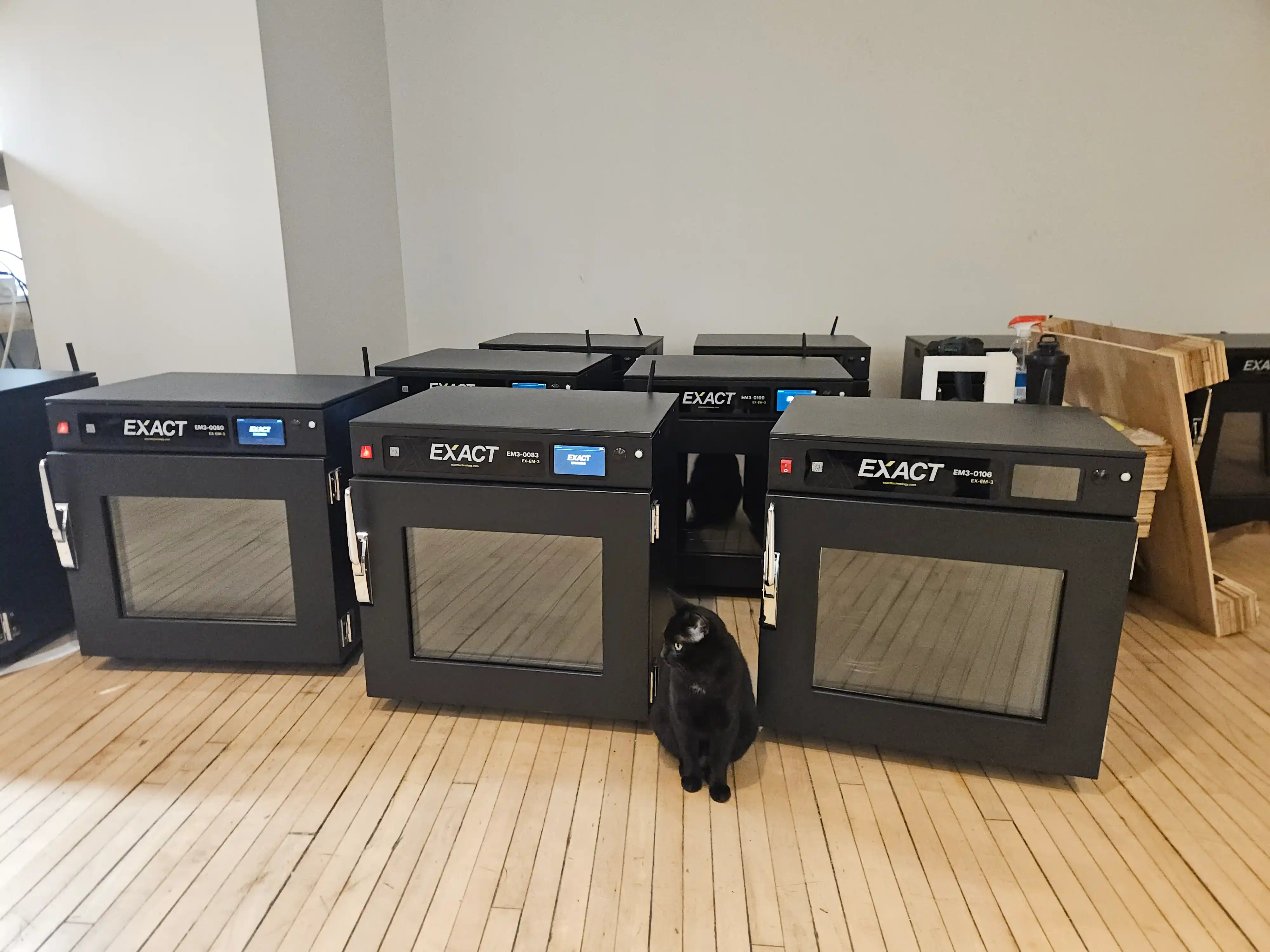
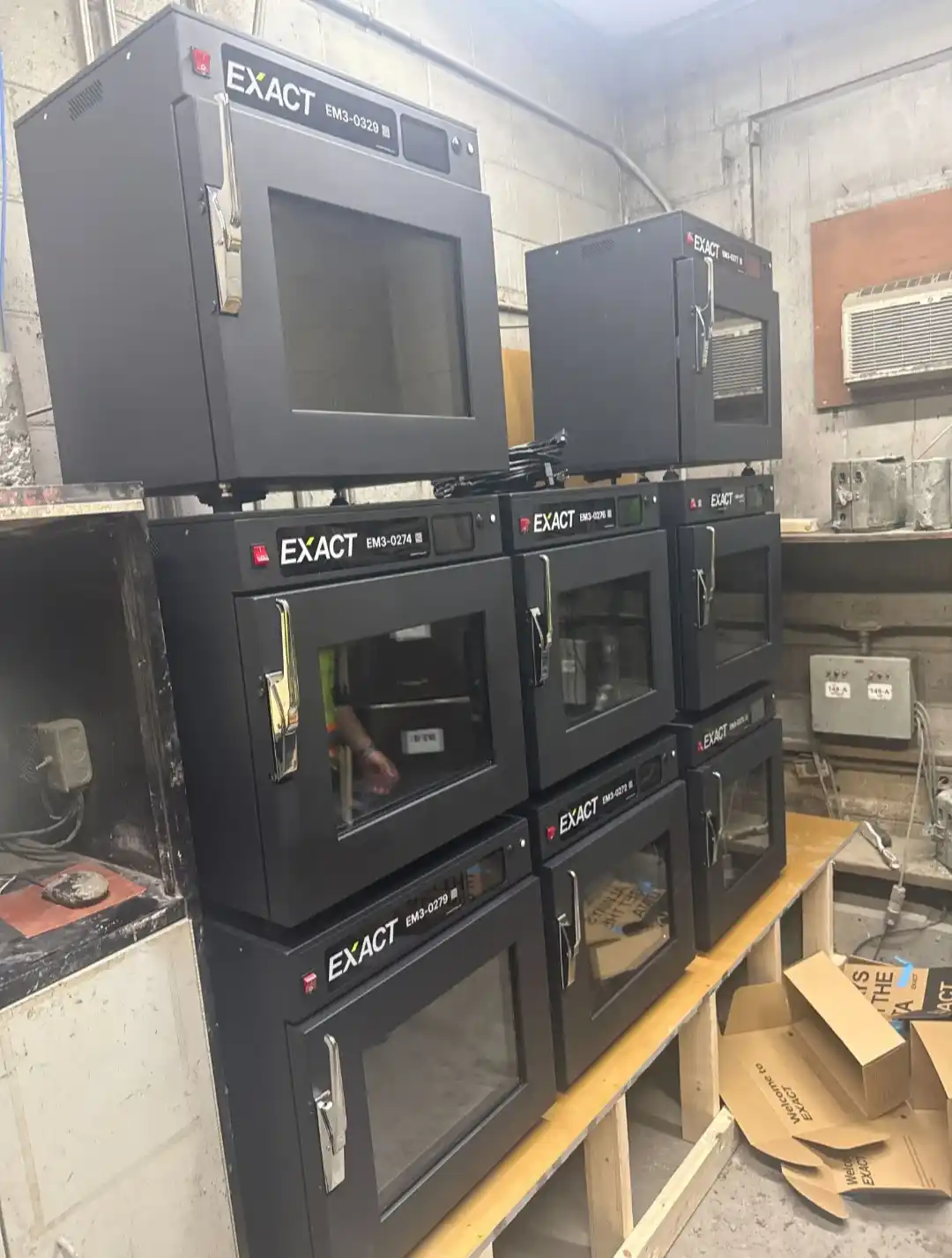
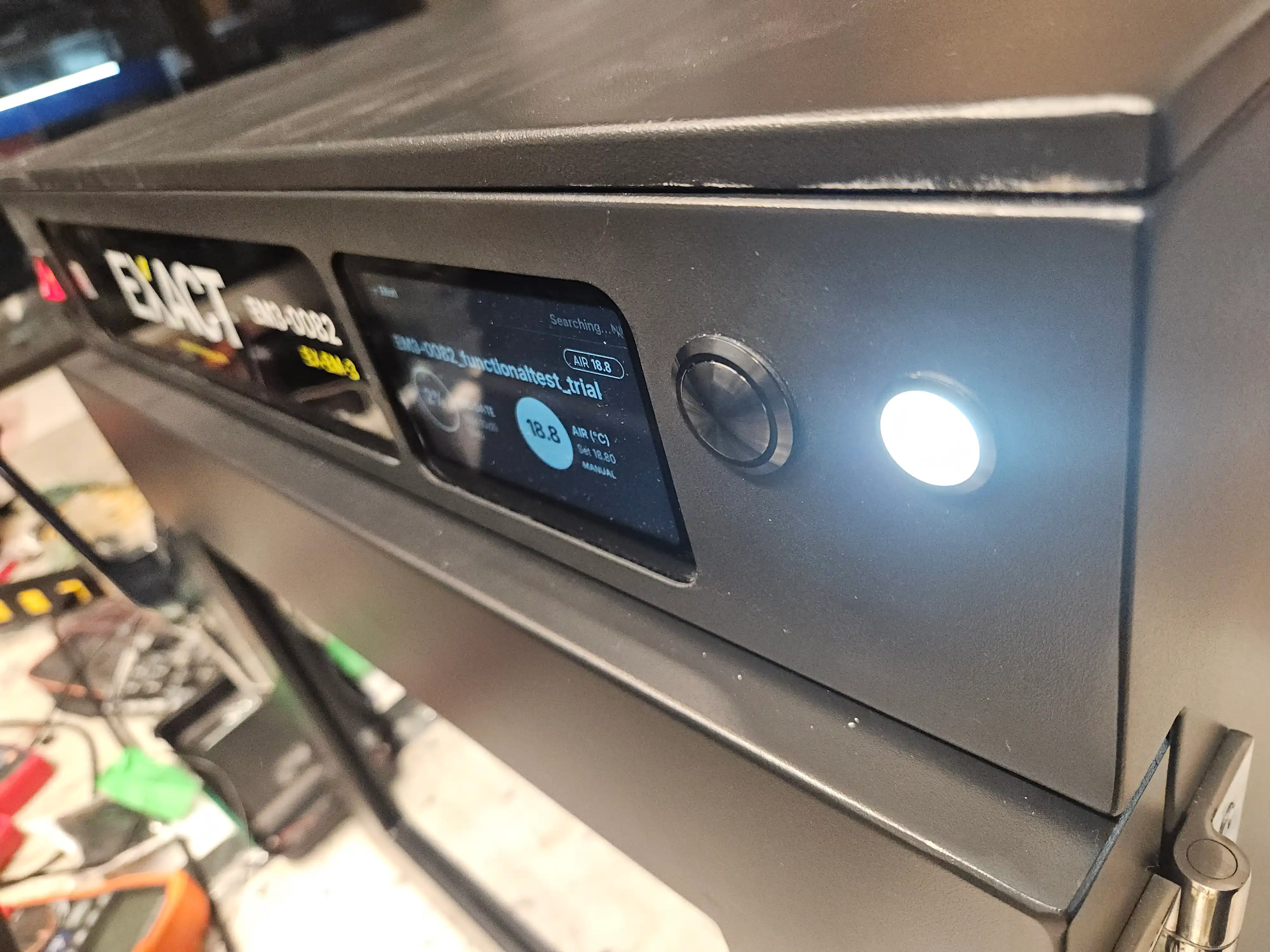
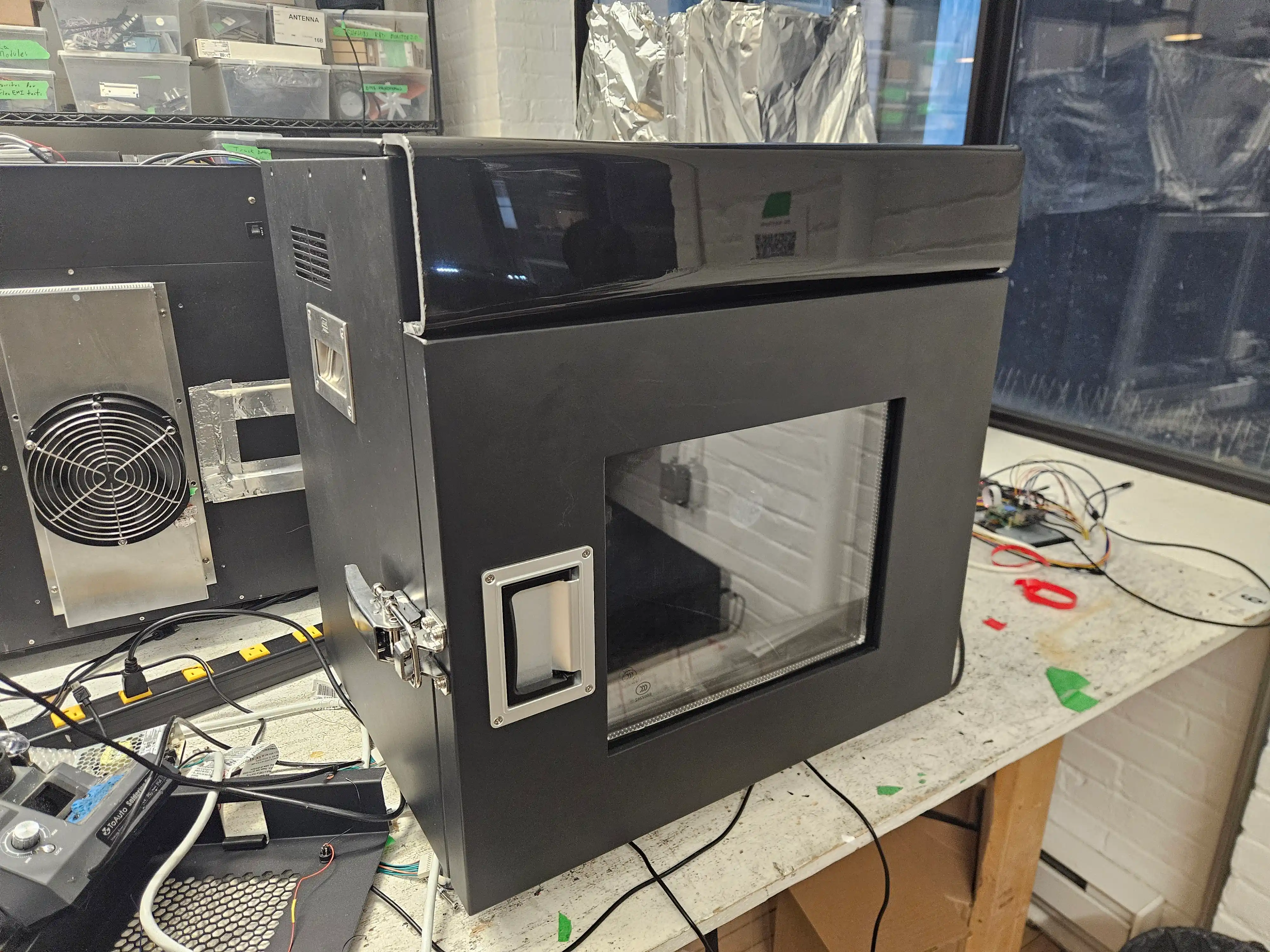
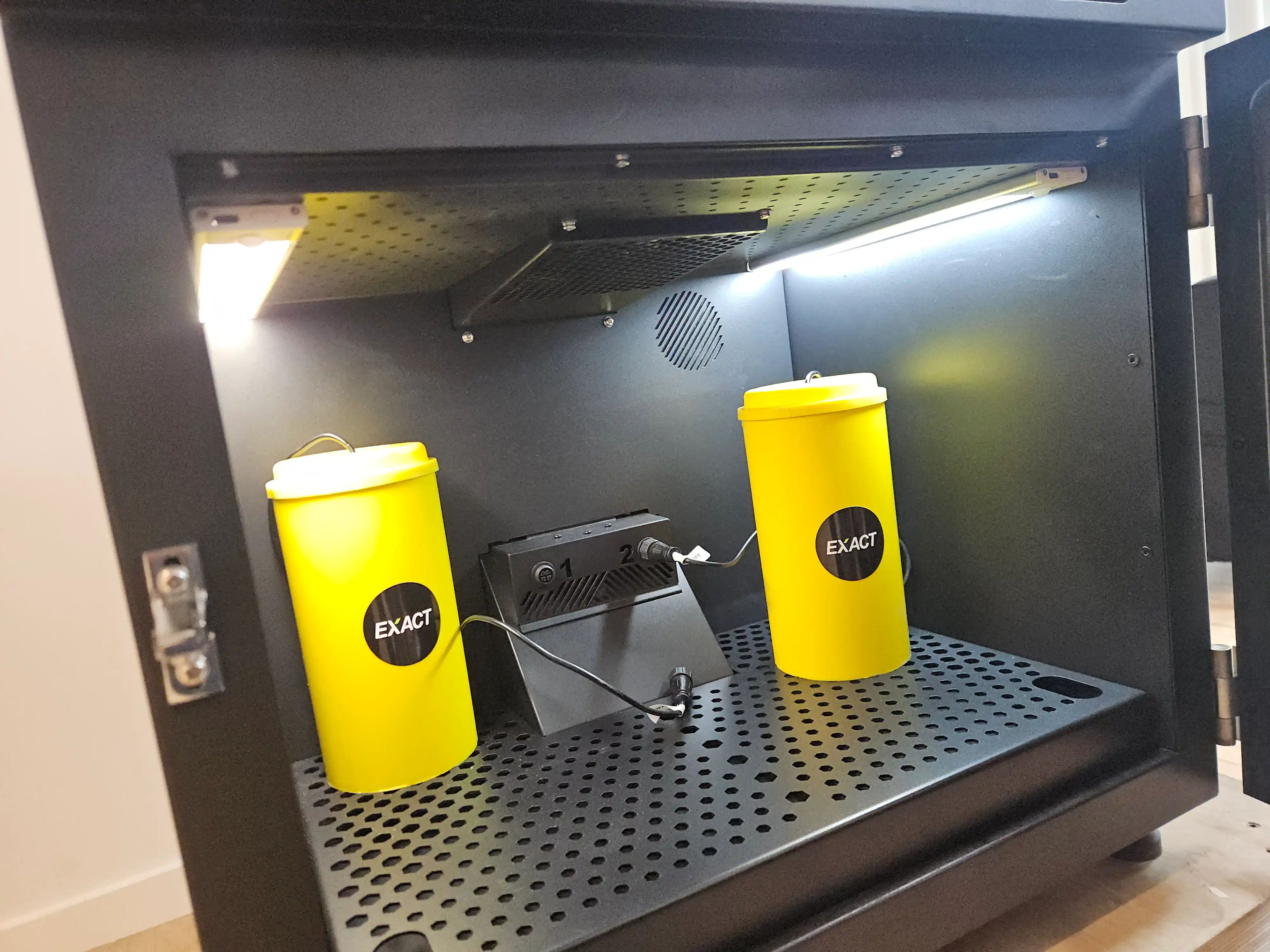
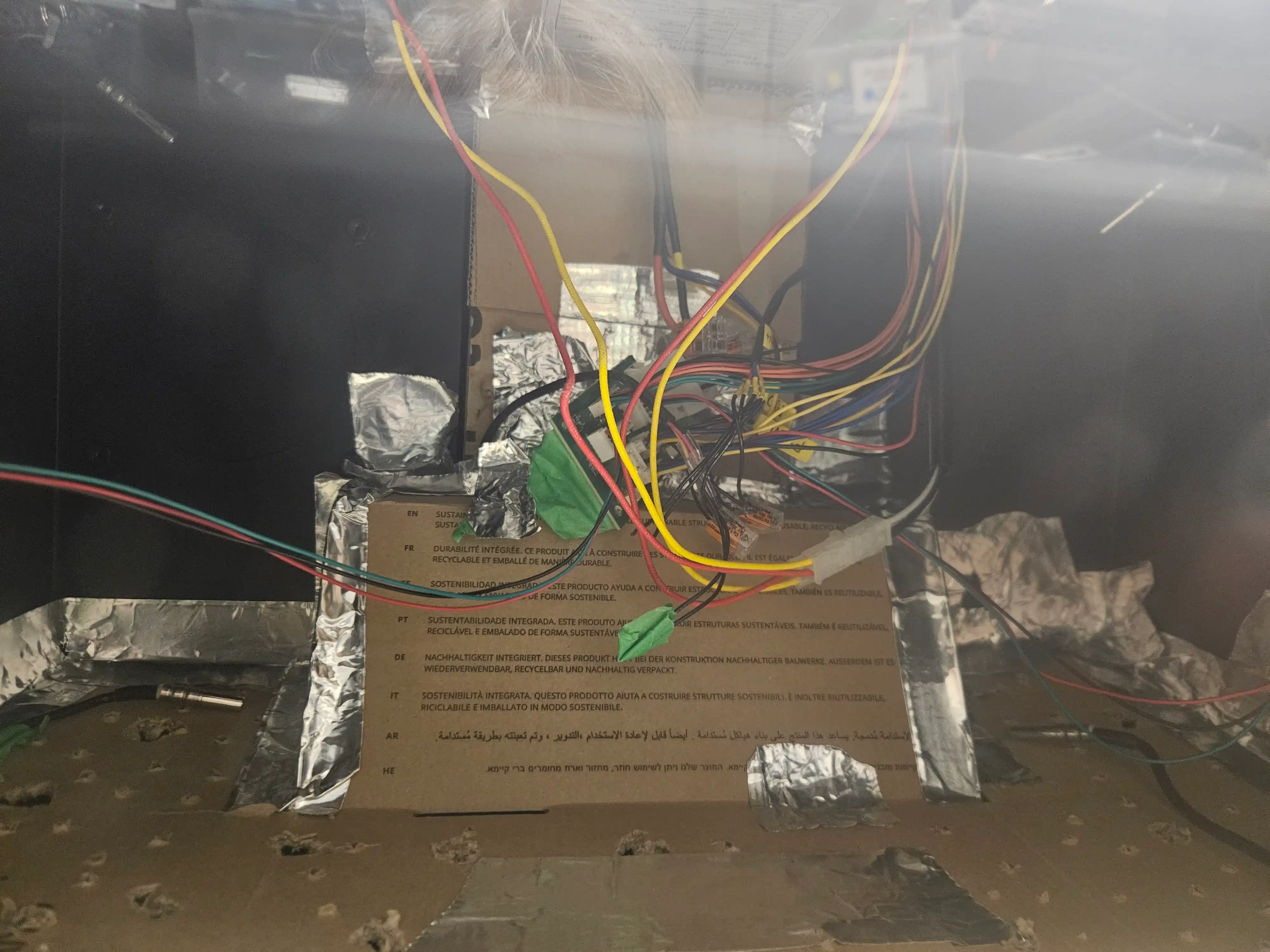
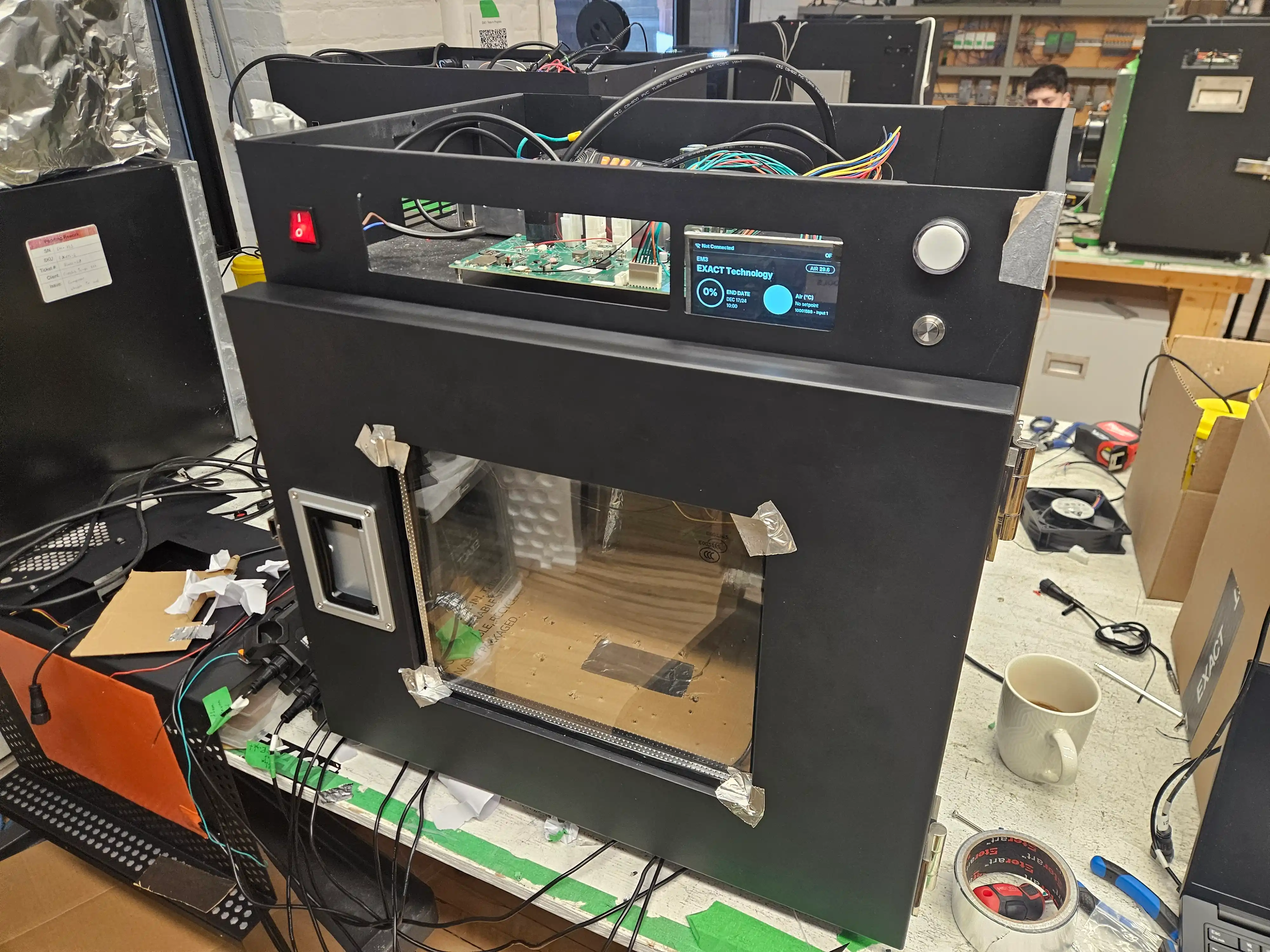
This is a match curing oven. In order to comply with concrete quality regulations, companies (Mostly in the USA, sometimes in Canada, depending on the project), are required to make standardized test cylinders of batches of concrete
used in their project, especially if it is a unique or experimental formulation. These cylinders cure adjacent to the concrete, sometimes covered in a tarp or put into a pool of water, and are then crushed to measure the compressive strength and failure mode
of the concrete.
However, as concrete is highly exothermic and dependent on ambient conditions, bulk pours heat and cure differently than isolated cylinders - setting these test cylinders adjacent to the pour runs the risk of over- or undercooking the test cylinders relative to the slab
squeaking breakage test results.
This temperature chamber is capable of heating and cooling up to 10 concrete test cylinders, matching its internal conditions to remotely acquired data from a temperature logger placed in a curing slab of concrete on site. It is able to track/match
ambient air conditions, or even match the core temperature of the cylinders themselves for a more accurate match.
More importantly this oven was deisgned to be fully repairable in the field - with all components no more than 6 screws away from a complete hot-swap.
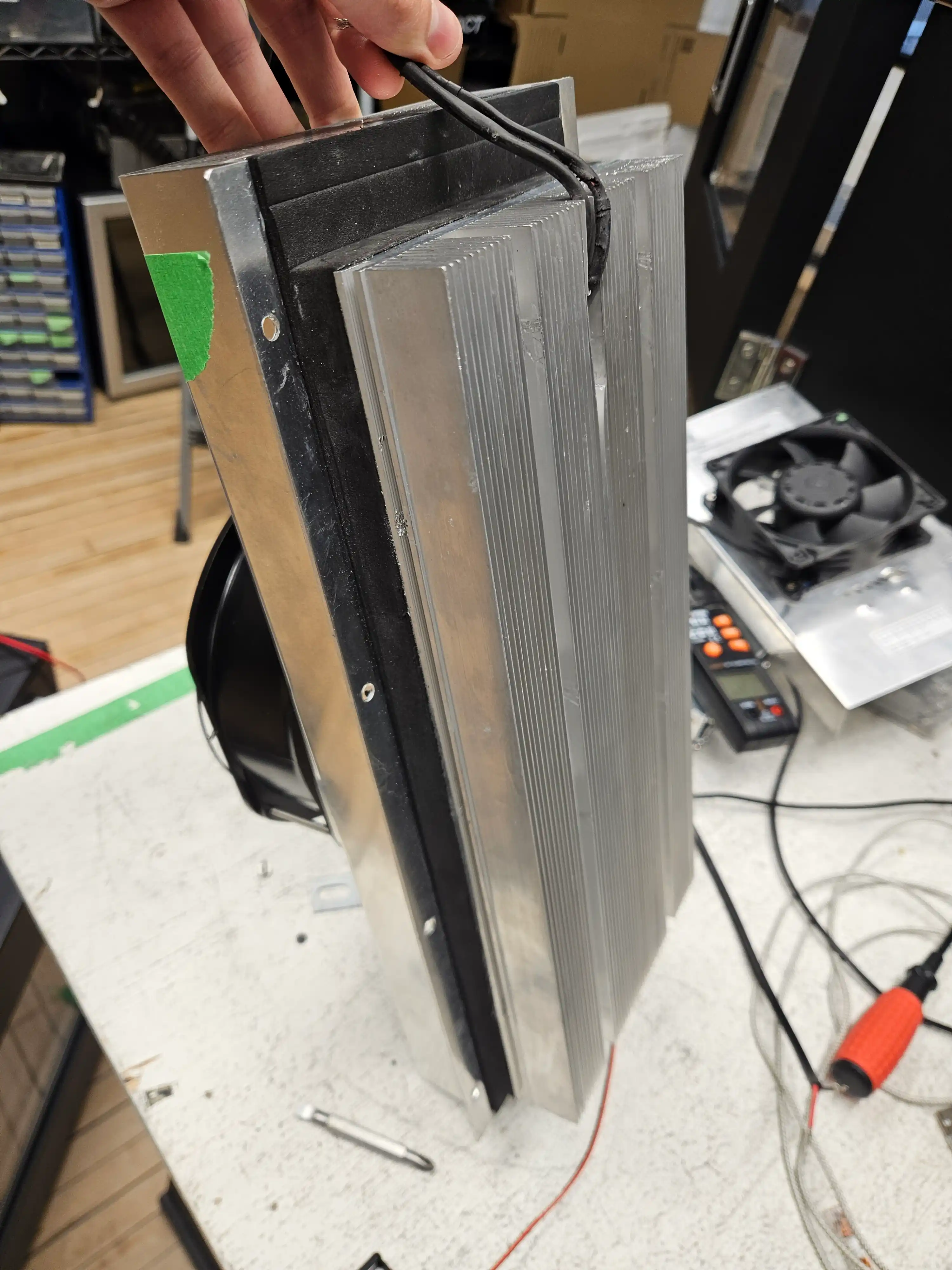
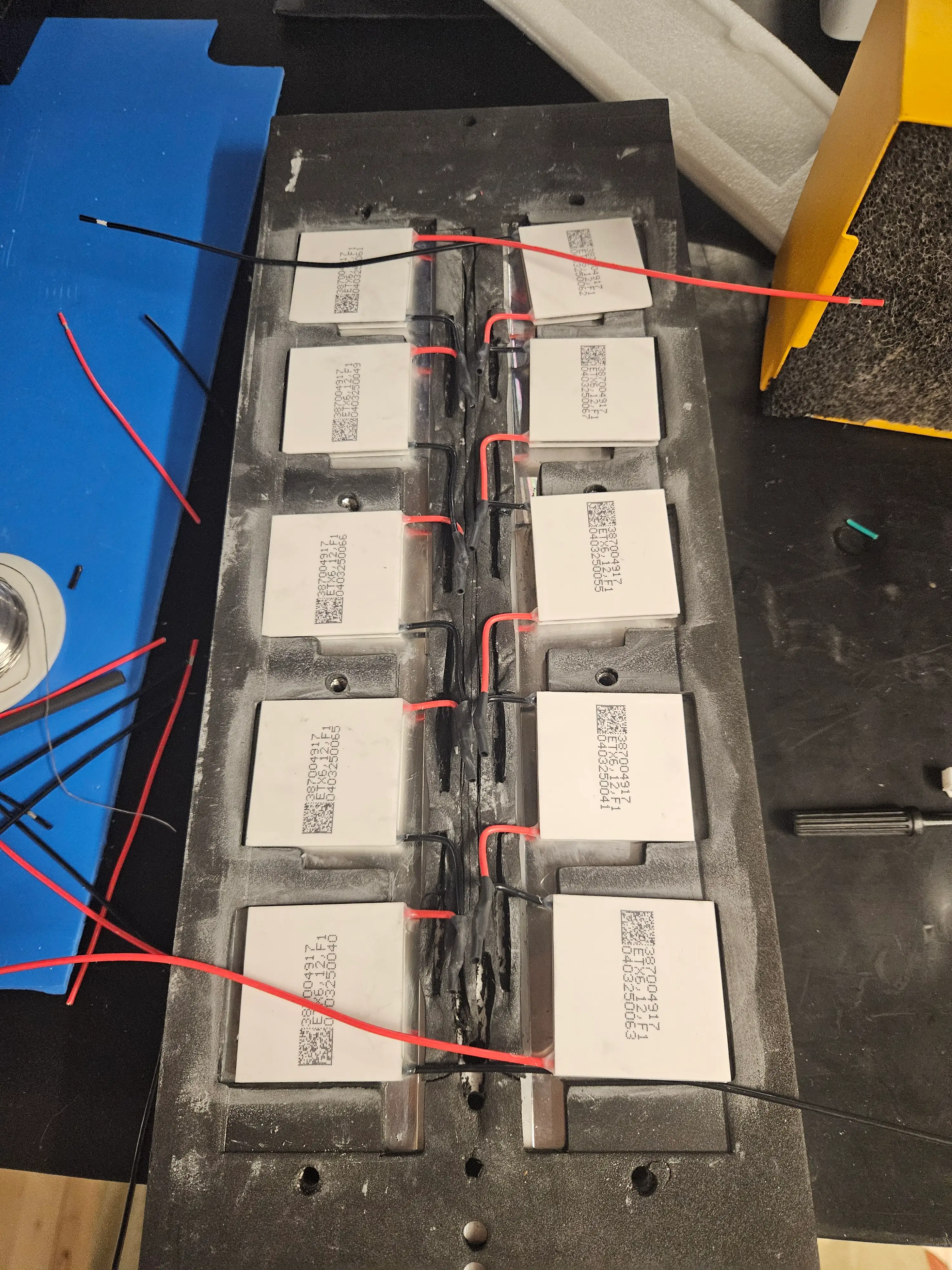
My design incorporates a 600W power Peltier array, ceramic heaters, and a tightly directed air column to pull or push as much energy from the chamber air as possible. Concrete, while exothermic, has an enormous thermal mass - making it
quite difficult to heat or cool to any large degree. As the goal of his oven is, in part, to be used in RnD labs to test new high-performance formulations of concrete that cure at high or low temperatures, it was critical to the design to
keep the rate of heating and cooling of cylinders as high as possible. Key design elements for this included temperature specifying certain components at various points in the air cycle to ensure they could handle the temperatures and sudden shifts
in temperature, as well as optimizing the flow rate of air over each of the temperature control surfaces.
As it was requested to be able to match with 10 cylinders, the temperature distribution inside the chamber was also critical - it's hard to say a lab device is better at matching slab conditions than the weather when an adjacent cylinder could be 10 degrees hotter
than its neighbor. This is a common issue in all ovens/temperature chambers.
A portion of my work on this device involved experimentally determining hot and cold spots inside the chamber and adjusting the design accordingly. I learned maybe too much about HVAC design strategies - using plenums, natural convection, and diffusion
screens to my advantage. My design was able to change the worst-case temperature spread in the chamber from +/- 15 deg C to +/- 2 deg C.